Manual Handling Operations Regulations 1992
The Manual Handling Operations Regulations 1992 require employers to assess the risks associated with moving objects by hand or bodily force, with the aim of eliminating or minimising the risk of injury or long-term health problems.
All manual handling has to be within the capability of the technician. Manual handling risk assessments can be applied to assess tasks that could pose a risk of acute or chronic injury or condition.
Guideline weights
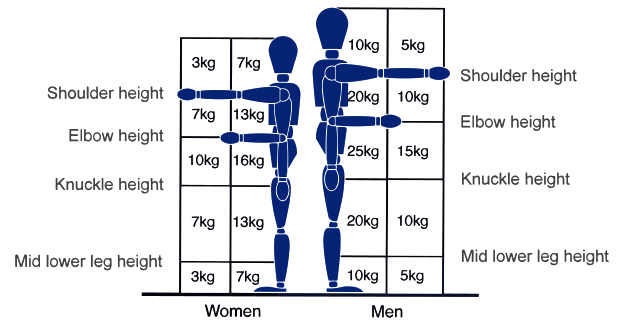
Approximate maximum loads when handling at various heights:
| Height | Women | Men |
|---|---|---|
| Shoulder | 3 / 7 kg | 5 / 10 kg |
| Elbow | 7 / 13 kg | 10 / 20 kg |
| Knuckle | 10 / 16 kg | 15 / 25 kg |
| Mid-lower-leg | 7 / 13 kg | 10 / 20 kg |
| Floor | 3 / 7 kg | 5 / 10 kg |
The lower figure is for handling at arm's length; the higher figure for handling close to the body.