Equipment
Every IRATA technician is responsible for inspecting their own equipment before each use. This chapter walks through the items in a typical rope access kit — harnesses, connectors, descenders, ascenders, back-up devices, ropes, webbing, lanyards and helmets — and the standards, inspection criteria and service intervals required by the regulations and manufacturers.
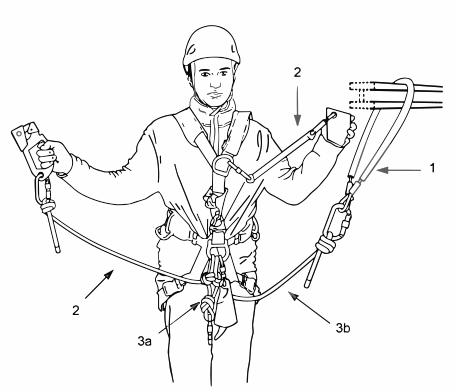
A typical personal set-up
- Wire anchor strop / textile sling, or a secondary back-up "duck" device.
- Absorbica L57 and ASAP / ASAP LOCK.
- 1 m dynamic EN 892 cow's tail × 2.
- Isolated bull-nose from a 4 m continuous EN 892 dynamic rope.
- Scaffold/Barrel to connectors.
Topics
01 · 4 min
Harnesses
02 · 4 min
Connectors (carabiners & Maillon Rapides)
03 · 5 min
Descenders, ascenders & back-up devices
04 · 7 min
Ropes — low stretch & dynamic
05 · 5 min
Webbing, slings, cow's tails & lanyards
06 · 3 min
Helmets
07 · 5 min
Equipment strengths, WLL & SWL
08 · 6 min
CE marking, certification & EN standards
09 · 3 min
Equipment marking & traceability
10 · 8 min
Equipment examination
11 · 4 min
Eyebolts — types and examination
12 · 4 min
IRATA technicians' responsibilities under LOLER
13 · 4 min
Storage, quarantine, reporting & disposal